Related article for this week (4): [Juhwan Noh et al. Inverse Design of Solid-State Materials via a Continuous Representation, Matter, vol. 1, no. 5, pp. 1370–1384, Nov. 2019. https://doi.org/10.1016/j.matt.2019.08.017 (accessed Feb. 10, 2022)]
Cubic box
phrase
In the article under consideration, the term is used to describe the sampling of a space given by a non-orthogonal coordinate system by cutting out from it a certain area of space described by a cube
Example: We denote this set of data as VO dataset. We used a cubic box of dimension l = 15 #A to generate Gaussian images for the basis. To represent the cell and basis images in grid space, we used m = 32 (cell) and n = 64 (basis) in each dimension.
ru: область пранстранства описываемая кубом (контекстуальный перевод)
genetic algorithm-based models
phrase
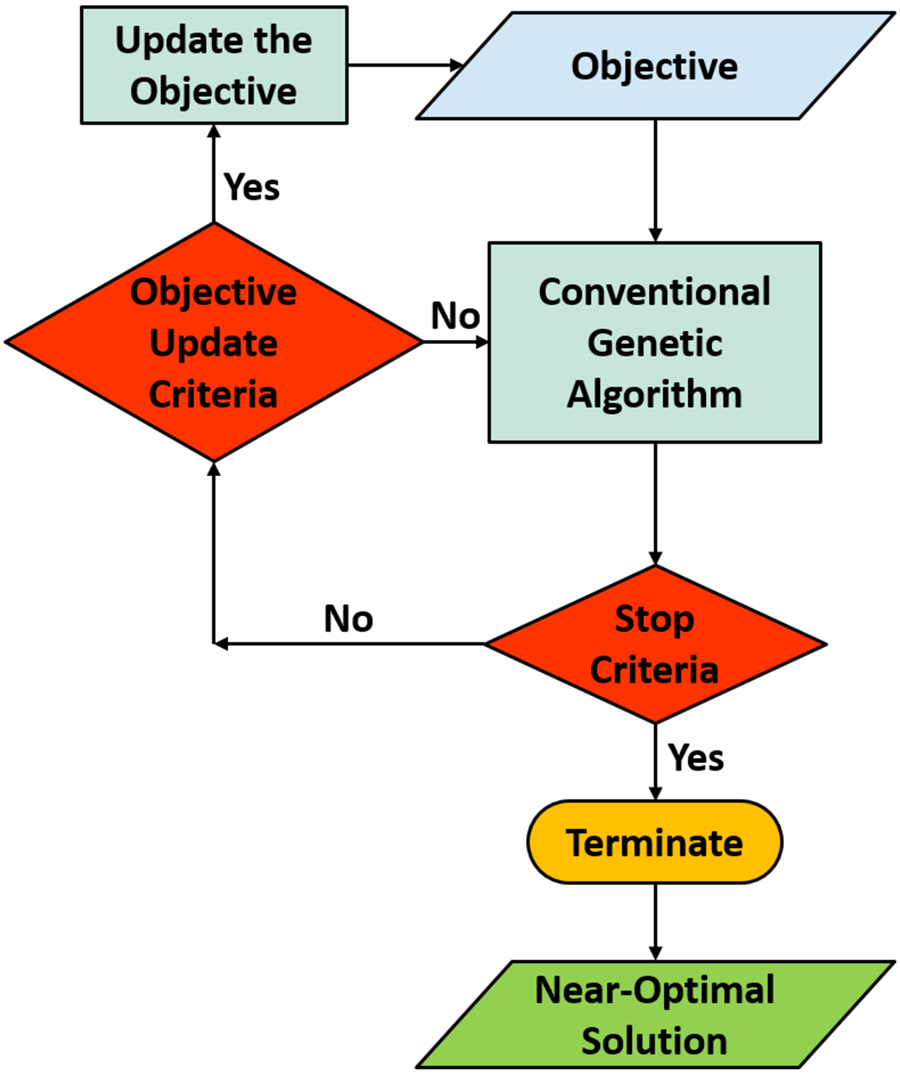
In computer science and operations research, a genetic algorithm (GA) is a metaheuristic inspired by the process of natural selection that belongs to the larger class of evolutionary algorithms (EA). Genetic algorithms are commonly used to generate high-quality solutions to optimization and search problems by relying on biologically inspired operators such as mutation, crossover and selection [https://en.wikipedia.org/wiki/Genetic_algorithm].
Example: There are other software packages using genetic algorithm-based models, such as CALYPSO, USPEX, and XtalOpt, which predict thermodynam- ically stable or metastable crystal structures for given chemical compositions and external conditions.
ru: модели, основанные на генетических алгоритмах
Inverse Transform
In considered article this term is used in the context of crystallography. It comes to processing of lattices descriptions from X-Ray methods. Because we have different waves of X-rays superimposed on one another during diffraction, it is difficult to isolate the contribution of each diffraction event to determine the lattice structure. Therefore a mathematical tool known as the Fourier transform is used. A Fourier transform is a representation of some function in terms of a set of sine-waves. The set of sine-waves of different frequencies has orthogonal properties. In general, any function can be represented in terms of a Fourier series, which is just the sum of enough sine-waves of the appropriate frequency, amplitude and phase. If we have a function that contains superpositions of many different waves with different amplitudes, freqency and phase, such as in our case of the diffracted x-ray signal we pick up on our detector, we can perform an inverse Fourier transform to determine the individual frequencies of the diffracted X-ray waves as well as their relative strengths.
Example: Table 1 shows statistical accuracy, in terms of root-mean-square error (RMSE), of the proposed iMatGen by comparing the inverse transformed lattice parameters and atomic positions with those of the input VO dataset structures (see Figures S9 and S10 for the detailed error distributions).
ru: обратное преобразование
Random sampling
phrase
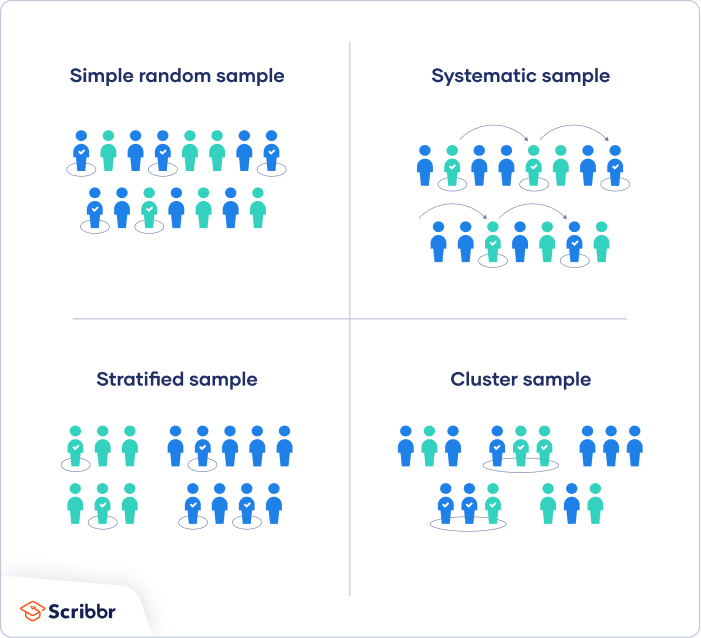
Random sampling, or probability sampling, is a sampling method that allows for the randomization of sample selection, i.e., each sample has the same probability as other samples to be selected to serve as a representation of an entire population. Random sampling is considered one of the most popular and simple data collection methods in research fields (probability and statistics, mathematics, etc.). It allows for unbiased data collection, which lets studies arrive at unbiased conclusions [https://corporatefinanceinstitute.com/resources/knowledge/other/random-sampling/].
Example: Unlike Slerp that would mainly sample stable structures, in the case of Random sampling, all the sampled latent vectors are centered around a boundary region between the stable and unsta- ble clusters, since the VAE learns the likelihood of data distribution using variational inference and tries to cover the whole data distribution based on a prior Gaussian (see Figure S2).
ru: построение случайной выборки
Slerp
noun
Slerp is shorthand for spherical linear interpolation, introduced by Ken Shoemake [https://dl.acm.org/profile/81100026146] in the context of quaternion interpolation for the purpose of animating 3D rotation. It refers to constant-speed motion along a unit-radius great circle arc, given the ends and an interpolation parameter between 0 and 1 [https://en.wikipedia.org/wiki/Slerp].
Example: The Slerp sampling generates structures satisfying the valid OSv condition with a much higher ratio (~89%) than the Random sampling (~17%), which can be attributed to the nature of Slerp that samples mainly in the stable region of the latent space (hence more reasonable structures), and that of Random that samples more at the boundary of stable and unstable regions.
ru: прямого перевода не существует. Slerp — это сокращение от сферической линейной интерполяции.